
The electric vehicle revolution is fundamentally reshaping automotive electronics and creating unprecedented demand for specialized PCBs. From battery management systems to motor controllers, electric vehicles require circuit boards designed for higher power, greater reliability, and more demanding thermal environments than traditional automotive electronics.
Traditional internal combustion engine vehicles contain electronics, but the scope and complexity pale compared to electric vehicles. An EV's electronic systems must manage battery packs capable of storing hundreds of kilowatt-hours of energy, control electric motors delivering hundreds of kilowatts of power, and coordinate charging from sources ranging from household outlets to DC fast chargers.
The PCB Content Revolution
Electric vehicles contain substantially more PCB content than conventional vehicles. Industry estimates suggest EVs contain three to five times the PCB area of comparable internal combustion vehicles. This increase reflects the fundamental difference in vehicle architecture—where ICE vehicles rely on mechanical systems, EVs depend on sophisticated electronic control.
Battery management systems (BMS) represent one of the largest PCB content categories in EVs. The BMS monitors individual cell voltages and temperatures, balances charge across cells, and manages the interface between the battery pack and the vehicle's other systems. High-reliability PCBs with extensive monitoring circuitry are required for each battery module.
Power electronics for motor control demand specialized PCBs designed for high current and thermal management. The inverter that converts battery DC to motor AC operates at high frequencies and power levels, requiring PCBs with thick copper layers, thermal vias, and sometimes metal core constructions.
Onboard charging systems, DC-DC converters, and thermal management systems all contribute to increased PCB content. Advanced driver assistance systems (ADAS), infotainment systems, and vehicle networking add further to the electronic component count.
Automotive PCB Requirements

Electric vehicle PCB requirements and manufacturing
Quality Standards and Certifications
Automotive PCBs must meet stringent quality requirements that exceed those for consumer and many industrial applications. The IATF 16949 quality management system standard is the foundation for automotive PCB manufacturing, establishing requirements for process control, traceability, and continuous improvement.
Beyond quality management systems, automotive PCBs must demonstrate reliability under conditions more demanding than most other applications. Temperature cycling tests, vibration testing, and humidity exposure testing verify that PCBs will maintain functionality throughout a vehicle's operational life—typically 15 years or more.
Specific automotive electronics standards, such as AEC-Q100 for integrated circuits and AEC-Q200 for passive components, establish reliability requirements that influence PCB design and assembly. While these standards apply primarily to components, they indirectly affect PCB requirements for thermal management and electrical performance.
Thermal Management Requirements
Thermal management is one of the most critical challenges in automotive PCB design. Power electronics in EVs generate substantial heat that must be dissipated to maintain reliable operation. PCB designs must accommodate thermal paths from heat-generating components to heat sinks or chassis structures.
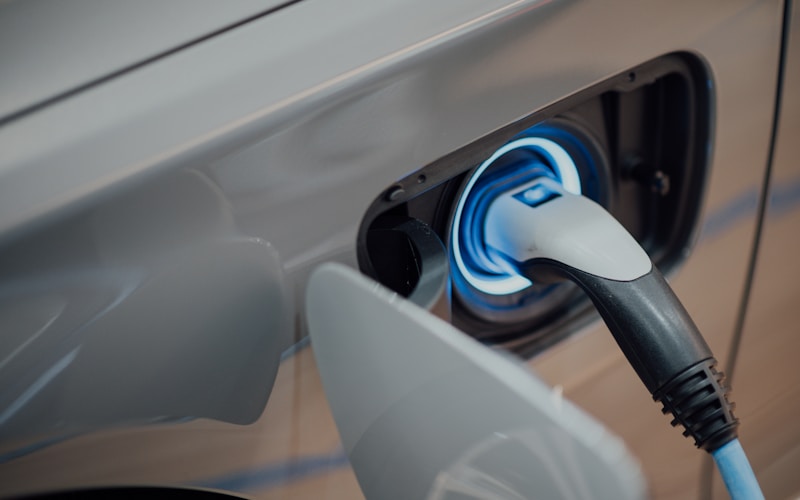
Thermal management in automotive PCB design
Metal core PCBs (MCPCBs) with aluminum or copper cores provide effective thermal management for high-power applications. The metal core conducts heat away from components more effectively than standard FR-4 laminates, enabling higher power density designs.
Heavy copper constructions—PCBs with copper thicknesses of 3 oz/ft² or more—provide both current-carrying capacity and thermal performance. The thicker copper spreads heat more effectively and provides lower resistance paths for high-current applications.
Reliability and Lifetime Requirements
Automotive electronics must operate reliably for the vehicle's entire service life, typically 15 years or 300,000 miles. This requirement drives design decisions throughout the PCB, from material selection to component mounting to trace sizing.
Thermal cycling is particularly demanding for automotive PCBs. Components and materials expand and contract at different rates as temperatures change. Over thousands of thermal cycles, these differential expansions can cause solder joint failures, via cracking, and delamination. Design for durability requires attention to materials compatibility, via construction, and component selection.
Vibration and mechanical shock are ever-present in automotive environments. PCBs must be designed to withstand continuous vibration from the road and occasional shocks from potholes and impacts. Secure mounting, appropriate component selection, and robust construction all contribute to vibration resistance.
Emerging Automotive Technologies
Several emerging technologies are creating new requirements for automotive PCBs and driving innovation in PCB design and manufacturing.
800V Battery Architectures
Higher battery voltages are becoming standard in premium EVs, with 800V systems replacing 400V architectures. Higher voltage enables faster charging and reduces current for equivalent power, but creates new challenges for PCB design.
Insulation requirements increase with voltage, requiring greater spacing between conductors and more robust conformal coatings. PCB materials must maintain their insulation properties at higher voltages and resist partial discharge that can occur at high voltages in air gaps.
Autonomous Driving Systems
Advanced driver assistance systems and autonomous driving capabilities are creating demand for high-performance computing PCBs. The sensors, processors, and networking equipment required for autonomous driving push the boundaries of automotive electronics capability.

Autonomous driving PCB and sensor technology
High-speed data processing requires PCBs with excellent signal integrity, controlled impedance, and careful attention to electromagnetic compatibility. The massive data flows from cameras, lidar, and radar sensors must be processed in real-time, demanding sophisticated PCB designs.
Vehicle-to-Everything (V2X) Communications
V2X communications—including vehicle-to-vehicle (V2V), vehicle-to-infrastructure (V2I), and vehicle-to-pedestrian (V2P) communications—are emerging as important safety features. These systems require reliable wireless communication capabilities and rapid processing of incoming data.
The electronics for V2X communications add to vehicle PCB content while introducing new requirements for electromagnetic compatibility and wireless performance. PCBs must be designed to minimize interference with communication systems while maintaining reliable operation in the challenging automotive environment.
Supply Chain Considerations
Automotive supply chains have unique characteristics that PCB manufacturers must understand and accommodate. Long vehicle development cycles, extended production runs, and component traceability requirements all influence how automotive PCBs are manufactured and supplied.
Automotive OEMs and tier-1 suppliers typically require comprehensive traceability for all components and materials. This requirement extends to the PCB level, with documentation needed for material lot codes, manufacturing process parameters, and test results. Complete traceability enables rapid identification and containment if quality issues emerge.
Product lifetime support is another automotive supply chain requirement. Vehicles remain in service for 15+ years, and spare parts must be available throughout this period. PCB manufacturers serving the automotive market must maintain capability to produce legacy designs and maintain appropriate inventory of discontinued materials.
Change management processes in automotive supply chains are rigorous. Any change to materials, processes, or manufacturing locations requires customer approval and extensive validation. This requirement for stability can conflict with the rapid evolution of PCB manufacturing technology, requiring careful management of change requests.
Working with Automotive PCB Manufacturers
Selecting the right PCB manufacturing partner is critical for automotive electronics success. The combination of quality requirements, technical challenges, and supply chain expectations means that not all PCB manufacturers are suited to automotive applications.
IATF 16949 certification is the minimum requirement for automotive PCB manufacturing. Beyond certification, look for demonstrated experience with automotive electronics, appropriate testing capabilities, and robust quality systems. References from existing automotive customers provide valuable insight into actual performance.
Technical capabilities must match your specific requirements. Automotive applications span a wide range of complexity, from simple body control modules to sophisticated power electronics. Verify that your potential manufacturing partner has experience with the specific technology level your application requires.
Automotive PCB Manufacturing Partner
YS CIRCUIT is IATF 16949 certified and ready for your automotive PCB needs.
Contact Us