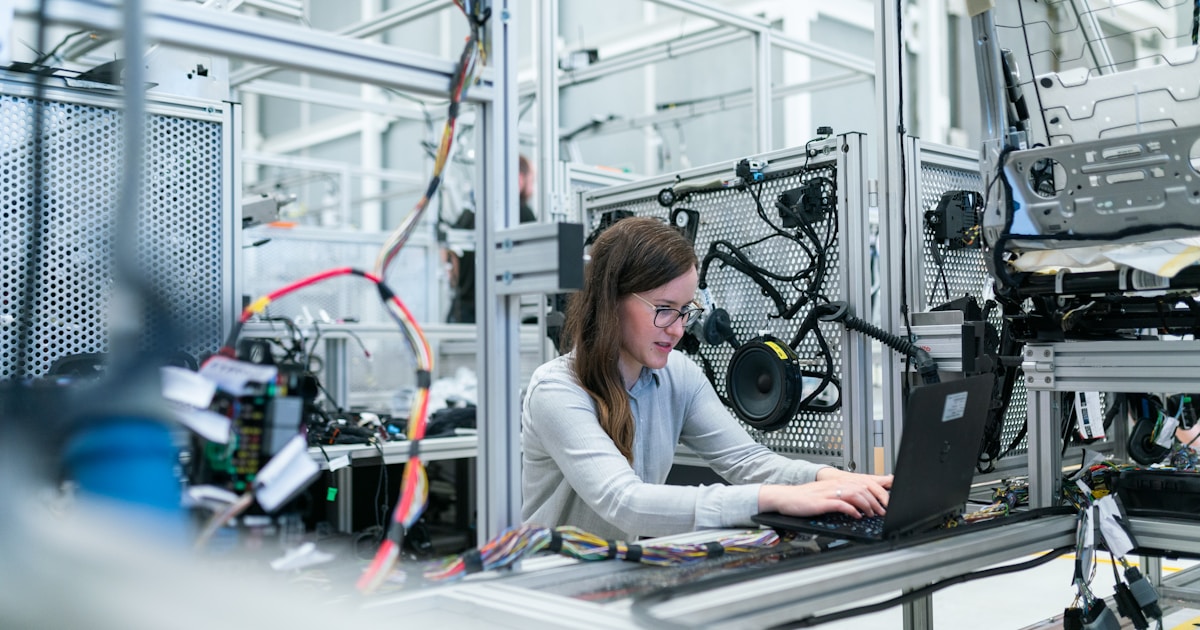
The concept of the smart factory—where machines communicate with each other, AI optimizes production in real-time, and humans oversee rather than perform every task—is no longer science fiction. Leading PCB manufacturers are deploying these technologies today, achieving remarkable improvements in efficiency, quality, and responsiveness.
The Connected Factory
At the heart of the smart factory is the Industrial Internet of Things (IIoT). Every piece of equipment—from CNC drilling machines to automated optical inspection systems—is equipped with sensors that continuously monitor performance, capture data, and communicate with central control systems.
This connectivity enables unprecedented visibility into production operations. Managers can track work-in-progress across the facility in real-time, identify bottlenecks as they develop, and make data-driven decisions about resource allocation. Operators receive instant alerts when equipment parameters drift outside optimal ranges, enabling rapid correction before quality issues arise.
AI-Driven Process Optimization
The vast amounts of data generated by smart factories would be overwhelming without AI to make sense of it. Machine learning algorithms analyze production data in real-time, identifying optimal process parameters and automatically adjusting equipment to maintain peak performance.

These AI controllers can respond to process variations faster than human operators, maintaining tighter tolerances and more consistent quality. Over time, the systems learn which adjustments produce the best results, continuously improving performance without human intervention.
Smart Factory Technologies
- Real-time equipment monitoring and analytics
- Automated process control systems
- Predictive maintenance algorithms
- AI-powered quality inspection
Autonomous Material Handling
Smart factories extend beyond the production equipment to include autonomous material handling systems. Automated guided vehicles (AGVs) and robotic arms move materials between processes, guided by AI that optimizes flow based on order priorities, equipment status, and delivery schedules.
This automation reduces material handling costs, eliminates human error in material tracking, and ensures that the right materials arrive at the right processes at the right time. The result is smoother production flow and faster order completion.
Digital Twins and Simulation
One of the most powerful smart factory tools is the digital twin—a virtual replica of the physical factory that runs simulations of production scenarios. Engineers can test new processes, equipment layouts, or order schedules in the digital environment before implementing them in the real factory.
This capability accelerates innovation and reduces risk. New products can be validated for manufacturability before they reach production. Equipment upgrades can be tested virtually to predict their impact on throughput and quality. The digital twin becomes a living model that continuously improves factory performance.

